29 Sept 2026
How Deep Can a Gold Detector Detect? Real Depths Explained
Real-world detection depths for coins, gold nuggets and large objects — and why target size, coil and soil matter more than any depth figure in an advert.

It is the first question almost every customer asks — and the one most often answered with exaggerated numbers. The honest answer is that depth depends mostly on the size of the target, not on the detector alone.
Typical real-world depths
| Target | Detector type | Realistic depth |
|---|---|---|
| Coin or ring | Standard VLF, stock coil | About 25–40 cm (10–16 in) |
| Small gold nugget (under a gram) | High-frequency VLF gold detector | A few centimetres to around 15 cm |
| Larger gold nugget | Pulse induction / ZVT | Noticeably deeper than VLF — tens of centimetres for bigger nuggets |
| Large metal object (box, cache) | Two-box detector or PI with large coil | Up to several feet |
| Large buried objects and cavities | 3D ground scanner | Metres, according to manufacturers — depends on object size and ground |
Garrett puts typical detection at 10 to 16 inches for ordinary targets, and notes that two-box machines such as the GTI 2500 can find large targets several feet down — while ignoring small items altogether.
What decides detection depth
- Target size and shape — the biggest factor. A large object is detected much deeper than a small one. A flat coin lying face-up reads deeper than the same coin on its edge.
- Coil size — a larger coil reaches deeper on big targets; a smaller coil is more sensitive to small gold. As a rough rule, a coin can be detected at about the coil’s diameter.
- Ground mineralisation — iron-rich and "hot" ground around Peshawar’s hills reduces depth on VLF machines. Good ground balancing, or a PI machine, recovers much of it.
- Frequency — low frequencies suit large, highly conductive targets; high frequencies suit fine gold.
- Time in the ground — older coins sometimes create a "halo" in the soil that makes them easier to detect.
Why adverts show bigger numbers
Manufacturer and seller depth claims are usually measured in air or ideal soil with large targets. In real ground with small targets, expect less. If a seller promises a small gold detector that finds a ring at several metres, be sceptical.
Which detector for depth?
For small gold, pick sensitivity (high-frequency VLF). For bigger nuggets in mineralised ground, pick a PI machine like the GPX 6000. For large objects several feet down, a two-box detector or a 3D ground scanner is the right tool — not a standard coin machine.
Further reading: Garrett: how deep do metal detectors detect?
Models in this guide
A high-frequency Minelab VLF built for small gold nuggets.
PKR 995,000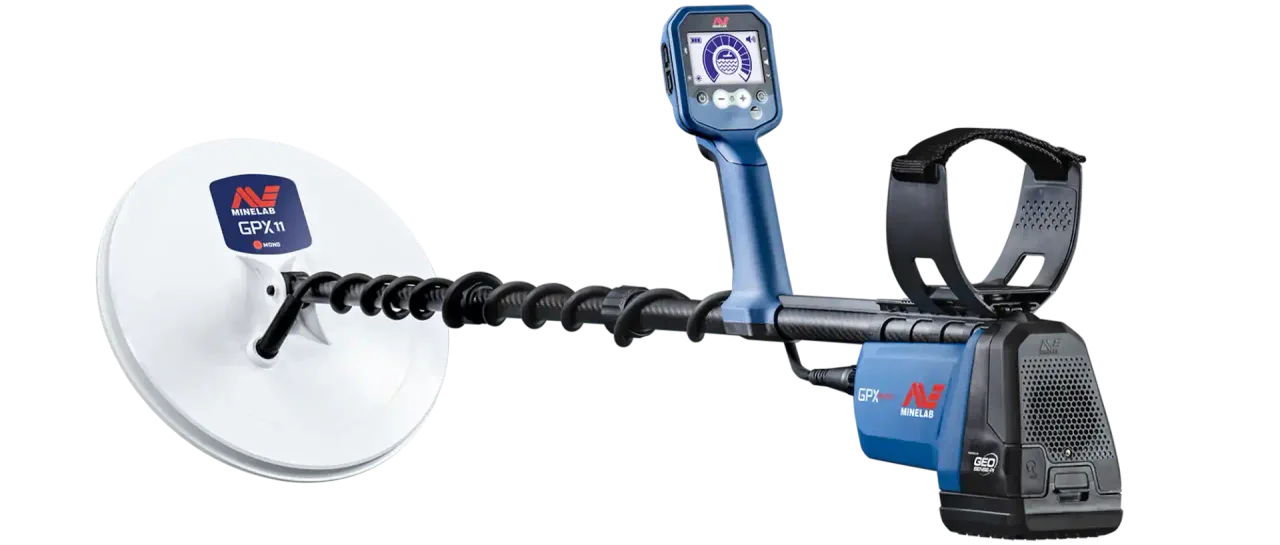
A pulse induction gold detector built for Australia's harshest goldfields.
PKR 3,795,000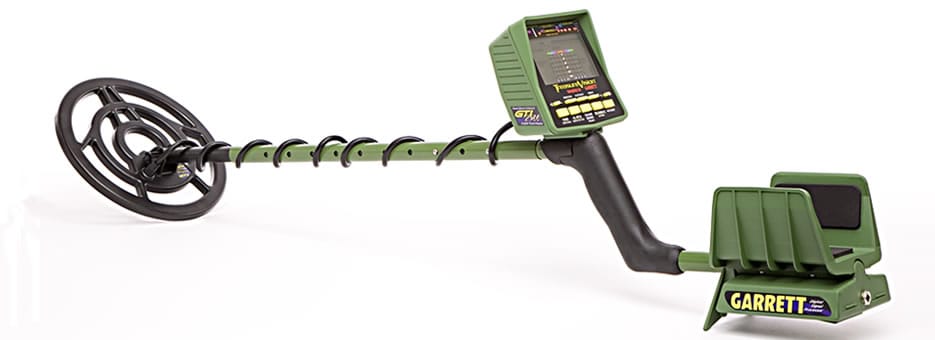
A classic Garrett VLF with imaging for relic and cache hunting.
PKR 395,000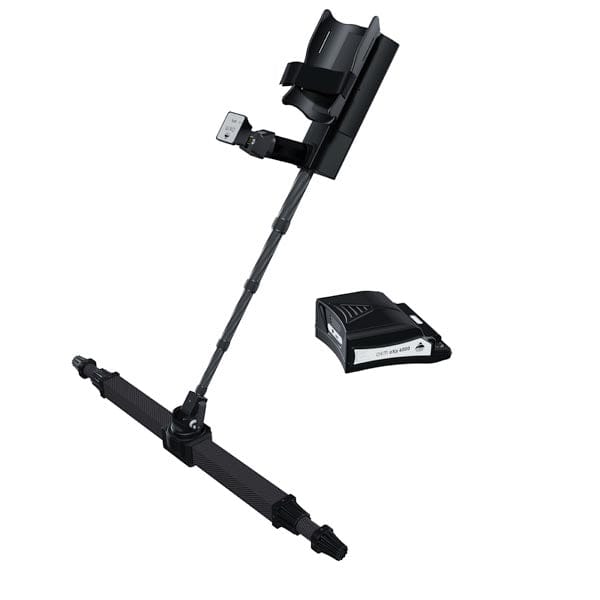
A German-engineered 3D ground scanner for cavity and tunnel detection.
PKR 9,860,000